
Add Row
Add Element
cropper
update
What's Up San Diego
update
Add Element
  • Home
  • Categories
    • San Diego Beaches /Fun At The Beach
    • San Diego Attractions / What's Happening
    • Walking San Diego / Health & Exercise
    • Eating & Cooking: Training & Tips
    • YOU / Self Help & Business Co-op
    • Class: Clean Living And Staying Sobe
    • Local Insights
    • Business Co-op
    • Business Spotlights
April 02.2025
3 Minutes Read

The Real Impact of San Diego's Camping Ban: Evidence and Insights

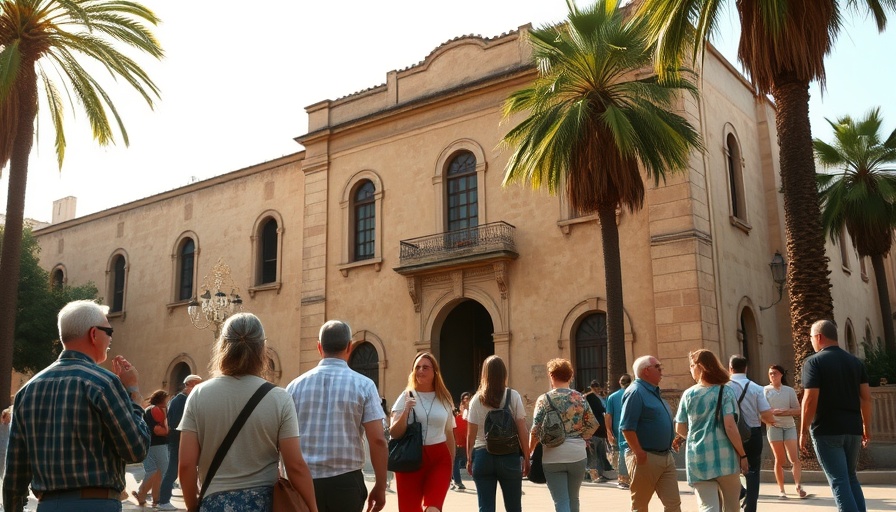
San Diego Camping Ban Impact: People by historic building and palm trees.

Understanding San Diego's Camping Ban: A Two-Year Review

It's been two years since San Diego's controversial camping ban was implemented, stirring discussions and debates throughout the city. This legislation, designed to regulate outdoor camping in public spaces when shelter is available—particularly near sensitive areas like schools and transit hubs—promises a dual outcome: to provide safety for residents and to address homelessness. But how effective has it really been? Data compiled by Lisa Halverstadt indicates that the majority of enforcement has taken place in city parks, with Balboa Park being the most impacted, accounting for 40% of the approximately 260 citations and arrests made under this law.

Balboa Park: A Microcosm of Challenges

Balboa Park, known as a hub for public engagement and cultural activities, has seen a notable rise in enforcement measures. Stakeholders in the park have expressed that while they are witnessing improvements in terms of cleanliness and safety, the reality on the ground is more complex. Many note that while people are removed from visible spaces, they are being pushed into more secluded and potentially hazardous areas, making outreach and service provision harder for social service organizations.

A Shift in Homelessness Dynamics

The camping ban did not merely vanish the issue of homelessness; instead, it shifted its dynamics. As people seek refuge from law enforcement, outreach programs report that these individuals often find refuge in hard-to-reach areas. This adds another layer of complexity for those providing support and services, as they now have to adapt to a changed landscape. It raises an essential question: is the camping ban truly solving the issue, or merely relocating it out of sight?

Potential Backlash and Criticism

Critics argue that the ban could worsen the wellbeing of homeless individuals by isolating them and limiting their access to resources. Social service providers have continuously expressed concerns that legislative measures like these, rather than support, risk further marginalizing individuals who already face numerous hurdles. Reports suggest a clear need for more comprehensive solutions that not only enforce regulations but provide adequate resources and supports.

Community Perspectives and Insights

As San Diego residents process the camp ban's impacts, their varied perspectives illustrate the multifaceted nature of homelessness in urban areas. Many community members close to Balboa Park voice a mix of relief and concern. While the presence of unhoused individuals in urban parks does impact visitors' experiences, the societal implication of criminalizing homelessness raises ethical questions. Residents commonly ask: Should our response prioritize criminalization, or should it focus on compassionate support and systemic solutions?

Future Trends and Predictions

Looking forward, the evolution of San Diego's camping ban could spell significant implications for the city. Potential modifications to the legislation may arise from public discussions that center around more balanced approaches—merging enforcement with supportive measures that encourage inclusion rather than exclusion. As San Diego navigates its relationship with homelessness, the community's voice and experiences will play a pivotal role in shaping the way forward.

Taking Action as a Community

In light of these developments, it becomes vital for San Diego residents to engage in informed dialogues around homelessness and public safety. Being involved in community forums, advocating for humane policies, and supporting local organizations can contribute to meaningful changes. If you’re curious to learn more or want to get involved, consider reaching out to local advocacy groups or participating in community discussions.

3 Views

0 Comments

Write A Comment

*
*
Related Posts All Posts
02.24.2026

Is Carbon Capture the Right Climate Solution for San Diego Residents?

Update The Controversial Climate Tool: Understanding Carbon CaptureAs San Diego residents engage with climate change, the push towards carbon capture and storage (CCS) technology has ignited a heated debate. The Biden Administration is placing significant emphasis on CCS, envisioning a future where carbon dioxide emissions can be effectively captured and sequestered underground. The strategy has been bolstered through tax incentives and billions of dollars in government support. However, the reliance on CCS is becoming increasingly contentious. Critics argue it may prolong fossil fuel dependency while failing to deliver on its promises.Pipeline Politics and Community ReactionsThe proposed system to transport carbon dioxide raises red flags for communities across the country. Projects can involve constructing thousands of miles of pipelines, which many localities oppose due to safety concerns. The experience from a 2020 pipeline rupture in Mississippi, which affected the health of many residents, highlights the risks involved. In San Diego, where community health is a priority, concerns about potential pipeline hazards resonate strongly. With hazardous pipelines looming, should communities reconsider CCS as a viable climate solution?The Financial Debate Around Climate SolutionsWhile the government has earmarked over $12 billion for CCS and related technologies over the past decades, questions are mounting regarding the efficacy of this spending. Many projects have underperformed or faced significant cost overruns. Furthermore, environmental advocates argue that this funding might better be allocated toward renewable energy initiatives, energy restoration efforts, or enhancing building efficiency.Expert Opinions and Alternative ViewsExperts warn that ongoing support for CCS can lead to public skepticism about climate mitigation efforts. In conversations with local environmental groups, there is a consensus emerging that immediate and effective action must align with proven green technologies. Real solutions may lie in promoting clean energy that doesn't depend on risky and often ineffective technologies like CCS.Taking Action: What Can San Diego Do?As residents of San Diego confront these issues, they have the power to influence decision-makers by participating in local discussions. Advocating for policies that prioritize renewable energy, coupled with a deep understanding of carbon management technology, can ensure that the city moves forward responsibly in climate resilience. Participation in local forums can help shape a sustainable future aligned with the needs of the community and the planet.

02.24.2026

How Makeda Dread Cheatom Transformed San Diego's Reggae and Culture Landscape

Update Merging Cultures Through Music: The Legacy of Makeda “Dread” CheatomIn the diverse soundscape of San Diego's music scene, few figures have made as profound an impact as Makeda “Dread” Cheatom. As a DJ, cultural entrepreneur, and founder of the WorldBeat Cultural Center, Cheatom has not only shaped the local reggae scene but has also become a pivotal bridge between cultures in the city. Amid a backdrop of racial tension and cultural segregation, Cheatom's work reflects the ethos of unity and understanding through art, making her a unique voice in the community.The Rise of Reggae in San DiegoGrowing up in Linda Vista—a neighborhood notable for its amalgamation of many cultures—Cheatom's interest in reggae music was ignited by her environment. In a moment that would shape her future, she personally met Bob Marley and later produced a concert featuring his music, which was virtually unheard on local radio at the time. "I remember going to radio stations and being told they didn’t know who Marley was," she recalls. This was a catalyst for her to educate the community about reggae, paving the way for a genre that would become a staple in the city’s nightlife.Establishing a Cultural CenterWhile Cheatom initially began her career as a DJ, her vision reached far beyond music. She identified a critical lack of representation for Black and African culture in San Diego and took it upon herself to establish a venue that would promote multiculturalism. In 1989, Cheatom founded the WorldBeat Cultural Center in Balboa Park, a multi-cultural hub where diverse traditions come together through art, food, and performance. Her tenacity earned her the dilapidated water tower at Balboa Park, transforming it into a vibrant community space.Trailblazing AchievementsNot limited to music, Cheatom's accomplishments span a variety of community-based initiatives. She opened the first vegetarian restaurant in San Diego, collaborated with health advocates, and even produced the annual Bob Marley Day events at the San Diego Sports Arena for over 25 years. Her contributions have not gone unnoticed, earning her awards such as the Channel 10 Leadership Award and accolades from various organizations celebrating her work in cultural exchange and environmental stewardship.Inspiring Future GenerationsCheatom's latest endeavor, the WorldBeat Center’s Children’s Ethnobotany Peace Garden, serves as an outdoor classroom, connecting children to the origins of their food while instilling a sense of environmental stewardship. One of her recent projects focuses on the impact of noise pollution in underserved communities, demonstrating her commitment to flattening socioeconomic barriers in education and community health.Conclusion: A Cultural ForceMakeda “Dread” Cheatom is more than a cultural leader; she is a trailblazer whose work transcends genres and unites communities. Her legacy is a celebration of diversity and an acknowledgment of music's profound ability to bring people together. In a world increasingly divided by cultural divides, Cheatom’s vision of a united humanity serves as a powerful reminder of art’s potential to foster peace and understanding among all people.

02.23.2026

Chaos and Violence Erupt in Tijuana After El Mencho’s Death: What It Means for Citizens

Update The Death of a Notorious Drug LordNemesio Rubén Oseguera Cervantes, infamously known as ‘El Mencho’, was a figure that loomed large in the world of organized crime. His leadership of the Jalisco New Generation Cartel (CJNG) made him one of the most wanted criminals not only in Mexico but also in the United States. This past Sunday, El Mencho’s reign came to a shocking end when the Mexican military executed a successful operation in Tapalpa, Jalisco, resulting in his death. This move marks a significant milestone in Mexico’s ongoing war against drug cartels.Violence Erupts in ResponseThe response to El Mencho’s death was immediate and chaotic. Authorities reported at least 22 incidents of violence across Baja California and other states, including Tijuana, where vehicles were set ablaze, and businesses shuttered in fear of reprisals. The impact of his assassination led to a tense atmosphere typified by roadblocks and widespread vandalism. As gunmen took to the streets, residents had no choice but to remain indoors while schools shut down and public transport was temporarily suspended.Heightened Security MeasuresIn the face of such violent outbursts, Baja California’s security forces mobilized aggressively. The governor announced enhanced security operations across the state. In addition, the United States Embassy issued a warning to American citizens, urging them to stay within their homes due to the escalating unrest and governmental operations.Expectations for the FutureWith El Mencho’s death, questions arise regarding the future of the CJNG and the potential power vacuum left in its wake. Experts predict an increase in violence as rival factions vie for control and seek to fill the leadership void left by the drug lord. Former high-ranking officials within the U.S. Drug Enforcement Administration indicated that a surge in narcoterrorism reminiscent of Colombia in the 1990s could unfold as factions engage in retaliatory actions, further destabilizing the state. Long-standing concerns about the CJNG’s extensive operations in both Mexico and the U.S. hint that this situation could escalate rather than diminish without immediate intervention from law enforcement.The Cooperation Between NationsThe operation that led to El Mencho’s demise was not a unilateral action; it was underscored by cooperation between Mexican and U.S. authorities. Enhanced intelligence-sharing played a critical role in the federal operation that ultimately took down one of the drug trafficking industry's most notorious players. Deputy Secretary of State Christopher Landau referred to this event as a “great development” for harmony and law enforcement in both nations.ConclusionThe killing of ‘El Mencho’ is a critical chapter in the larger narrative of drug violence and governance in Mexico. As the country wrestles with ongoing cartel violence and fear, the world watches closely for what this development portends for both Mexican and American societies. History has shown that while the fall of a kingpin can be seen as a victory in the fight against organized crime, it often leads to yet another cycle of violence. In this case, vigilance and effective strategies will be vital in ensuring that the law prevails and that citizens feel safe within their neighborhoods.

Terms of Service

Privacy Policy

Core Modal Title

Sorry, no results found

You Might Find These Articles Interesting

T
Please Check Your Email
We Will Be Following Up Shortly
*
*
*